Wheelchair Transportation Tips for First-Time Riders
Published: Jun 18, 2026
•
Updated: Jun 18, 2026
Introduction
Booking wheelchair-accessible transportation for the first time can feel overwhelming, especially when coordinating around medical appointments, mobility equipment, and unfamiliar pickup procedures.
Ride With Alliance specializes in non-emergency medical transportation for riders who use wheelchairs, scooters, and other mobility aids. Our vehicles and drivers are equipped to handle a range of mobility needs, from manual and power wheelchairs to oversized scooters and oxygen equipment.
This guide is designed to help first-time riders and their families understand what to expect, what to prepare, and how to make the experience as comfortable and stress-free as possible.
What Makes Wheelchair Transportation Different
Wheelchair-accessible transportation requires more planning than a standard ride. The vehicle must be equipped with a ramp or lift, the driver must be trained in safe securement, and the trip must account for extra boarding and deboarding time.
Key differences include:
- Vehicles are equipped with ramps or hydraulic lifts
- Wheelchairs are secured using approved tie-down systems
- Drivers are trained in mobility assistance and safe transfers
- Pickup windows may be slightly longer to allow for safe boarding
- Riders may need to specify manual vs. power wheelchair at booking
Communicating these details clearly at the time of booking helps RWA dispatch the right vehicle and prepare the driver before arrival.
What to Tell Us When Booking
The more information shared at booking, the smoother the experience will be. For wheelchair rides specifically, our team needs the following details.
Wheelchair Type
Let us know whether the rider uses a manual wheelchair, power wheelchair, or mobility scooter. If the chair is oversized or bariatric, include the approximate dimensions or weight capacity so we can confirm vehicle fit.
Transfer Ability
Can the rider transfer independently from the wheelchair to a vehicle seat, or do they need to remain in the wheelchair during the entire trip? This affects which vehicle type is assigned.
Additional Equipment
- Oxygen tanks or portable concentrators
- IV poles or infusion equipment
- Ventilators or respiratory devices
- Seat cushions or positioning supports
Pickup Location Details
Include ramp access, elevator availability, entrance width, or any obstacles the driver should know about before arrival. This is especially important for residential pickups or older building facilities.
What to Expect on the Day of the Ride
Being prepared on the day of the ride reduces stress and keeps the schedule on track.
Before the Driver Arrives
- Have the rider and wheelchair positioned near the pickup entrance
- Confirm the appointment time and destination address
- Pack any necessary items such as ID, insurance card, or medication list
- Remove any footrests or attachments that may interfere with securement
During Boarding
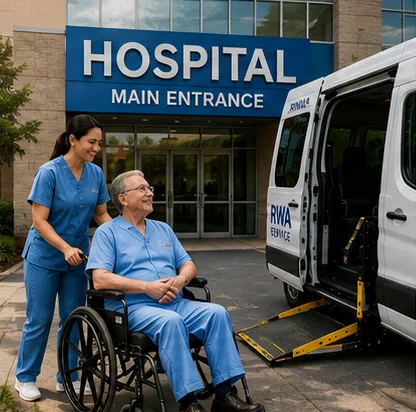
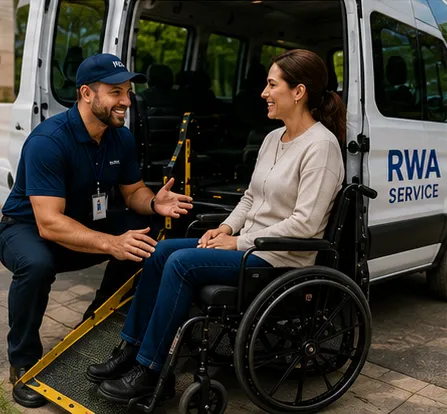
The driver will position the ramp or lift and guide the rider safely into the vehicle. Wheelchair tie-downs will be secured before the trip begins. Do not rush this process — proper securement protects the rider throughout the journey.
At the Destination
The driver will assist with deboarding and confirm the rider has reached the entrance or has been received by facility staff before departing.
Final Thoughts
First-time wheelchair transportation does not have to be stressful. With the right information shared at booking and a few simple preparations on the day of the ride, the experience can be smooth and comfortable from start to finish.
Ride With Alliance is here to help riders and families navigate non-emergency medical transportation with confidence. If you have questions about what to expect or what to prepare, our team is happy to help before the trip begins.
Need Help Preparing for a Ride?
Book dependable non-emergency medical transportation with RideWith Alliance Dispatch.
Related Articles