How Wheelchair-Accessible Vehicles Support Safer Trips
Published: Jun 18, 2026
•
Updated: Jun 18, 2026
Introduction
For riders who use wheelchairs or other mobility aids, the vehicle itself is a critical part of what makes a medical trip safe. A standard rideshare or taxi is not designed for wheelchair users — it lacks the equipment, space, and safety systems needed to transport a rider who cannot transfer to a standard seat.
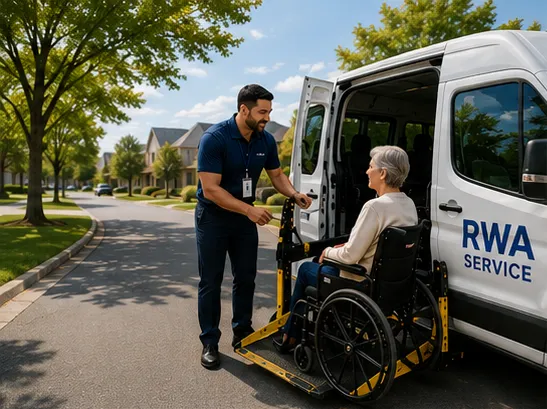
Wheelchair-accessible vehicles (WAVs) are purpose-built or specially modified to accommodate riders in wheelchairs or scooters. Ride With Alliance operates WAVs equipped with the systems needed to board, secure, and transport wheelchair users safely and comfortably on every trip.
This guide explains what makes a vehicle wheelchair accessible, what safety systems are involved, and what riders and families can expect when using RWA's accessible fleet.
What Makes a Vehicle Wheelchair Accessible
A wheelchair-accessible vehicle is more than just a larger van. It includes specific structural modifications and installed equipment designed to support safe boarding, in-transit positioning, and deboarding for wheelchair users.
Standard WAV features include:
- Ramp or hydraulic lift for boarding and deboarding
- Lowered floor or raised roof for wheelchair clearance inside the vehicle
- Tie-down track systems along the floor for securing the wheelchair
- Four-point wheelchair securement straps or Q-straint systems
- Lap and shoulder seatbelt for the rider while in the wheelchair
- Adequate space for power wheelchairs, scooters, and bariatric chairs
How Wheelchair Securement Works
Proper securement is the most safety-critical step in any wheelchair transport. An unsecured wheelchair — even in a short trip — creates serious injury risk for the rider in the event of sudden braking or a collision.
The securement process:
- The driver positions the wheelchair in the designated securement area inside the vehicle
- Four tie-down straps are attached to the wheelchair frame at designated anchor points
- The lap belt is secured across the rider's hips
- The shoulder belt is positioned correctly across the chest
- The driver confirms all connections before the vehicle moves
Riders and families should never ask the driver to skip or rush the securement process. This step protects the rider throughout the entire journey.
What Riders and Families Should Know
Communicate Your Chair Type at Booking
Manual wheelchairs, power wheelchairs, and mobility scooters have different dimensions and weight ratings. Sharing the chair type at booking helps RWA confirm the right vehicle is assigned for the trip.
Bariatric and Oversized Chairs
If the rider uses a bariatric wheelchair or an oversized power chair, provide the approximate dimensions and weight at booking. Not all WAVs accommodate every chair size, and early confirmation prevents day-of complications.
Allow Time for Boarding
Ramp and lift deployment, wheelchair positioning, and full securement take more time than boarding a standard vehicle. Build this into your schedule by being ready before the pickup time and informing the facility of potential arrival windows.
Accessories and Add-Ons
Let RWA know if the wheelchair has removable footrests, armrests, or other components that may need to be adjusted or removed for proper securement. Some accessories can interfere with the tie-down anchor points.
Final Thoughts
Wheelchair-accessible vehicles make it possible for riders with mobility needs to travel safely and with dignity. Every feature — from the lift to the securement system — exists to protect the rider and ensure the trip is as comfortable and stable as possible.
Ride With Alliance is committed to providing safe, properly equipped wheelchair transportation across the Greater Chicagoland area. If you have questions about our accessible vehicles or need to confirm compatibility with a specific wheelchair type, contact our team before booking.
Need Help Preparing for a Ride?
Book dependable non-emergency medical transportation with RideWith Alliance Dispatch.
Related Articles